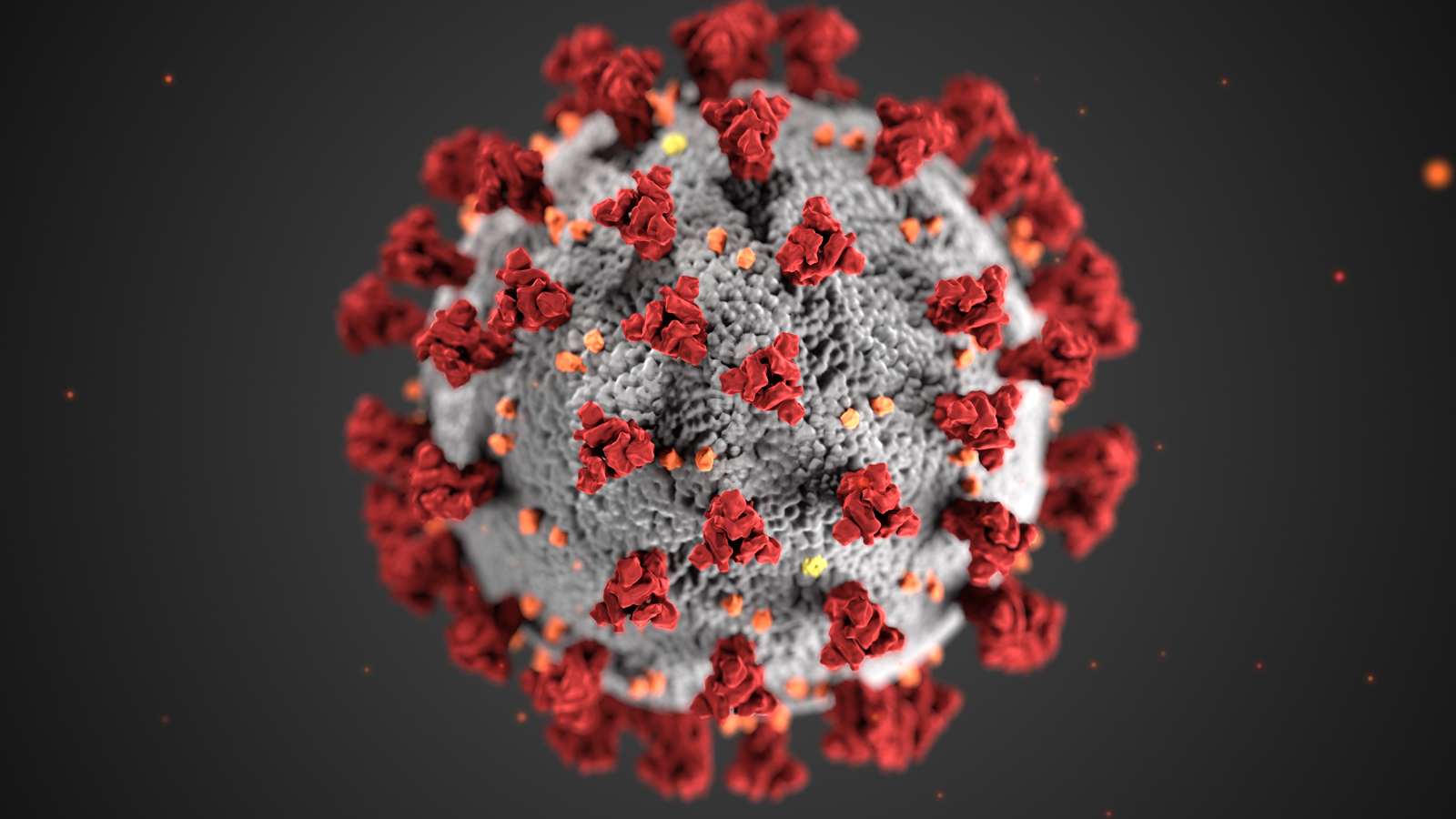
The SARS-CoV-2 virus causes Coronavirus Disease (COVID-19), an infectious disease.
The majority of patients infected with COVID-19 will have mild to moderate symptoms and will recover without any additional therapy. Some, on the other hand, will become critically unwell and require medical assistance.
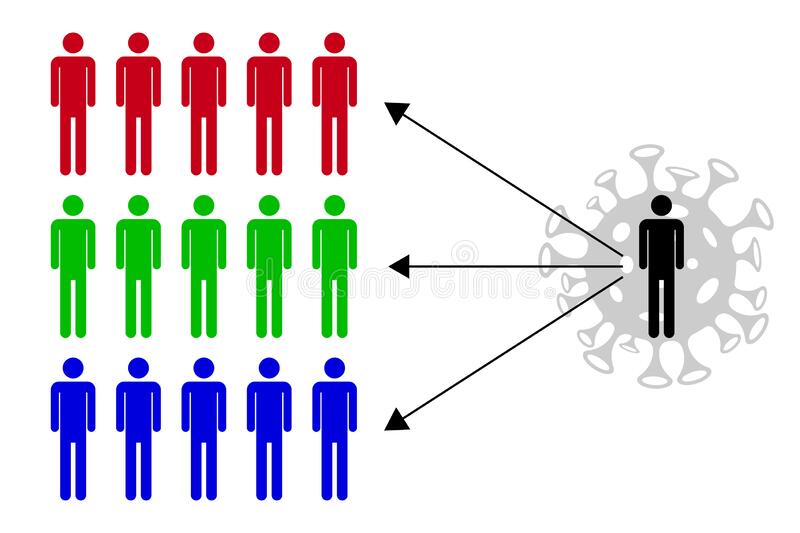
HOW IT SPREADS?
(WHO)we know that the disease is caused by the SARS-CoV-2 virus, which spreads between people in several different ways.
•According to current evidence, the virus spreads primarily between people who are in close proximity to one another, such as at a conversational distance. When an infected person coughs, sneezes, speaks, sings, or breathes, the virus spreads in small liquid particles from their mouth or nose. When infectious particles in the air are inhaled at close range (this is known as short-range aerosol or short-range airborne transmission) or when infectious particles come into direct contact with the eyes, nose, or mouth, another person can contract the virus (droplet transmission).
•The virus can also spread in cramped and/or poorly ventilated indoor environments, where people tend to spend longer periods of time. This is due to the fact that aerosols can linger in the air or travel further than a conversational distance (this is often called long-range aerosol or long-range airborne transmission).
•People can also become infected by touching their eyes, nose, or mouth after coming into contact with virus-infected surfaces or objects.
When an infected person coughs, sneezes, speaks, sings, or breathes, the virus spreads in microscopic liquid particles from their mouth or nose. Larger respiratory droplets to smaller aerosols are among the particles.
If you are near someone who has COVID-19, you can be infected by breathing in the virus, or by contacting a contaminated surface and then touching your eyes, nose, or mouth. The virus is more easily spread indoors and in crowded places.
When do infected people pass the virus on to others?
Infected people can be contagious, even if they don’t show symptoms, and the virus can spread from them to others.
According to laboratory findings, infected people are most infectious just before they develop symptoms (two days before symptoms) and early in their illness. People who develop a severe disease may remain infectious for a longer period of time.
While it is possible for someone who has never developed symptoms to pass the virus on to others, it is unclear how often this happens, and more research is needed in this area.
What’s the difference between asymptomatic and pre-symptomatic people? Don’t they both refer to someone who is symptom-free?
Both terms are used to describe people who are symptom-free. The distinction is that ‘asymptomatic’ refers to people who are infected but never show symptoms, whereas ‘pre-symptomatic’ refers to people who are infected but have not yet shown symptoms but will later.
Is there any environment where COVID-19 can easily spread?
Yes, any situation where people are in close quarters for an extended period of time increases the risk of transmission. Indoor settings, particularly those with poor ventilation, are riskier than outdoor settings. Singing or heavily breathing during exercise, for example, cause more particles to be expelled from the mouth, increasing the risk of transmission.
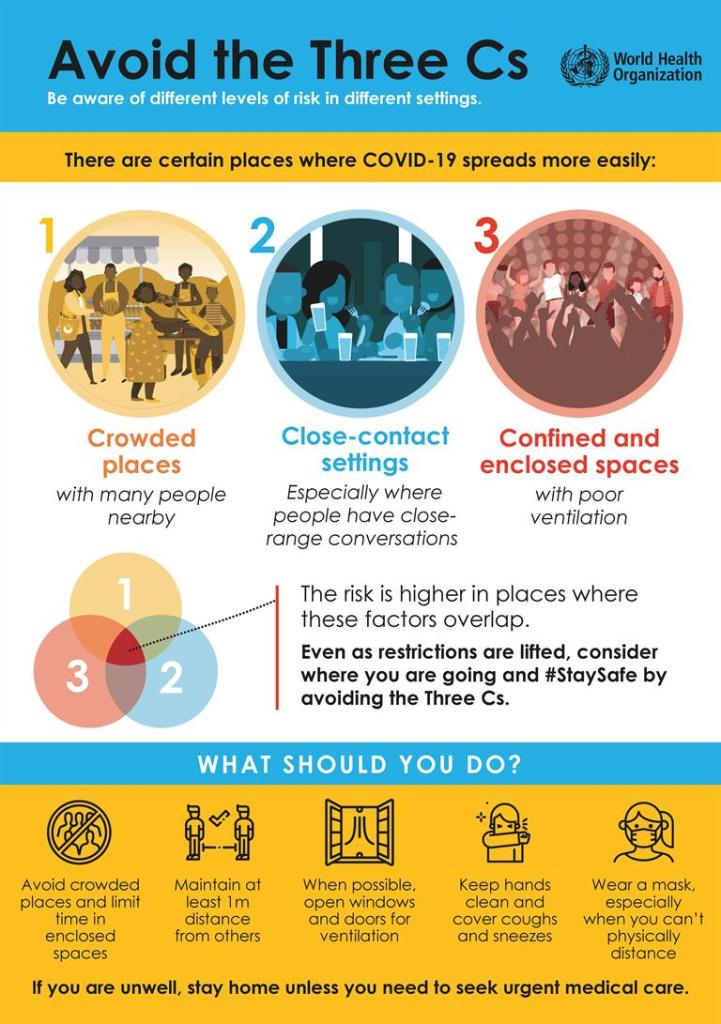
The “Three C’s” are a helpful way to consider this. They describe environments where the COVID-19 virus can spread more easily:
- Crowded places;
- Close-contact settings, especially where people have conversations very near each other;
- Confined and enclosed spaces with poor ventilation.
During medical procedures known as aerosol generating procedures, there is an increased risk of infection in health facilities where people are being treated for COVID-19. These can produce very small droplets that can stay suspended in the air for longer periods of time and spread beyond the range of conversation (typically 1 meter). This is why health workers who perform these procedures or work in environments where they are performed should take specific airborne protection precautions, such as wearing appropriate personal protective equipment like respirators. Visitors are not permitted in areas where these procedures are being performed for the same reason.
How can I lower my chances of contracting COVID-19?
There are a number of things you can do to protect yourself and your family from COVID-19. To reduce your risks, you must first understand them.
Take the following precautions/prevention:
- Check to see what national, regional, and local authorities are recommending so you have the most up-to-date information for your location.
- Maintain a safe distance: Stay at least 1 meter away from others, even if they don’t appear to be sick, because the virus can infect people who don’t show any symptoms.
- Wear a mask: If you can’t physically distance yourself or if you’re indoors, wear a well-fitting three-layer mask. Before putting on or removing a mask, make sure your hands are clean.
- Avoid crowded areas, indoor locations with poor ventilation, and prolonged contact with others. Spend more time outside than you do inside.
- When indoors, increase the amount of outdoor air by opening windows.
- Avoid touching surfaces that have been touched by people infected with COVID-19, especially in public places or health facilities. Using standard disinfectants, clean surfaces on a regular basis.
- Hands should be washed frequently with soap and water or an alcohol-based hand rub. Carry an alcohol-based rub with you and use it frequently if you can.
- Coughs and sneezes should be covered with a bent elbow or tissue, which should be thrown into a closed bin as soon as possible. After that, wash your hands or rub your hands with an alcohol-based hand rub.
- Vaccinate yourself: Vaccinate yourself when the time comes. Vaccination advice and recommendations should be followed according to local guidelines.
SYMTOMS
Most common symptoms:
- Fever
- Cough
- Tiredness
- Loss of taste or smell
Less common symptoms:
- Sore throat
- Headache
- Aches and pains
- Diarrhoea
- a rash on skin, or discolouration of fingers or toes
- Red or irritated eyes
Serious symptoms:
- difficulty breathing or shortness of breath
- loss of speech or mobility, or confusion
- Chest pain
The SARS-CoV-2 virus causes Coronavirus Disease (COVID-19), an infectious disease.
The majority of people infected with COVID-19 will have mild to moderate symptoms and will recover without any special treatment. Some, on the other hand, will become seriously ill and require medical assistance.
WORLD HEALTH ORGANIZATION
©WHO2022
 HEALTH